Mandalas have been part of Indian art and spiritual traditions for centuries, and today they are one of the most popular choices for home décor. But what does a mandala actually mean – and where should you hang one? Here is a simple guide to the meaning of mandala wall art, the best places for it in your home, and how to choose the right piece.
What does a mandala mean?
Mandala is a Sanskrit word often translated as “circle”. A mandala is a design that radiates out from a central point in balanced, repeating patterns. In Hindu and Buddhist traditions, mandalas have long been used as symbols of the universe, wholeness and harmony, and as aids to focus and meditation.
In a modern home, many people choose mandala art simply because it feels calming to look at. The symmetry draws the eye to the centre, and the repeating patterns create a sense of order and balance in a room.
Common mandala motifs and what they suggest
- Lotus: purity and new beginnings.
- Paisley: a much-loved Indian motif associated with growth and abundance.
- Circles and rings: unity and wholeness.
- Floral petals: beauty, growth and positivity.
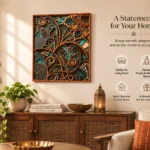
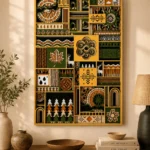
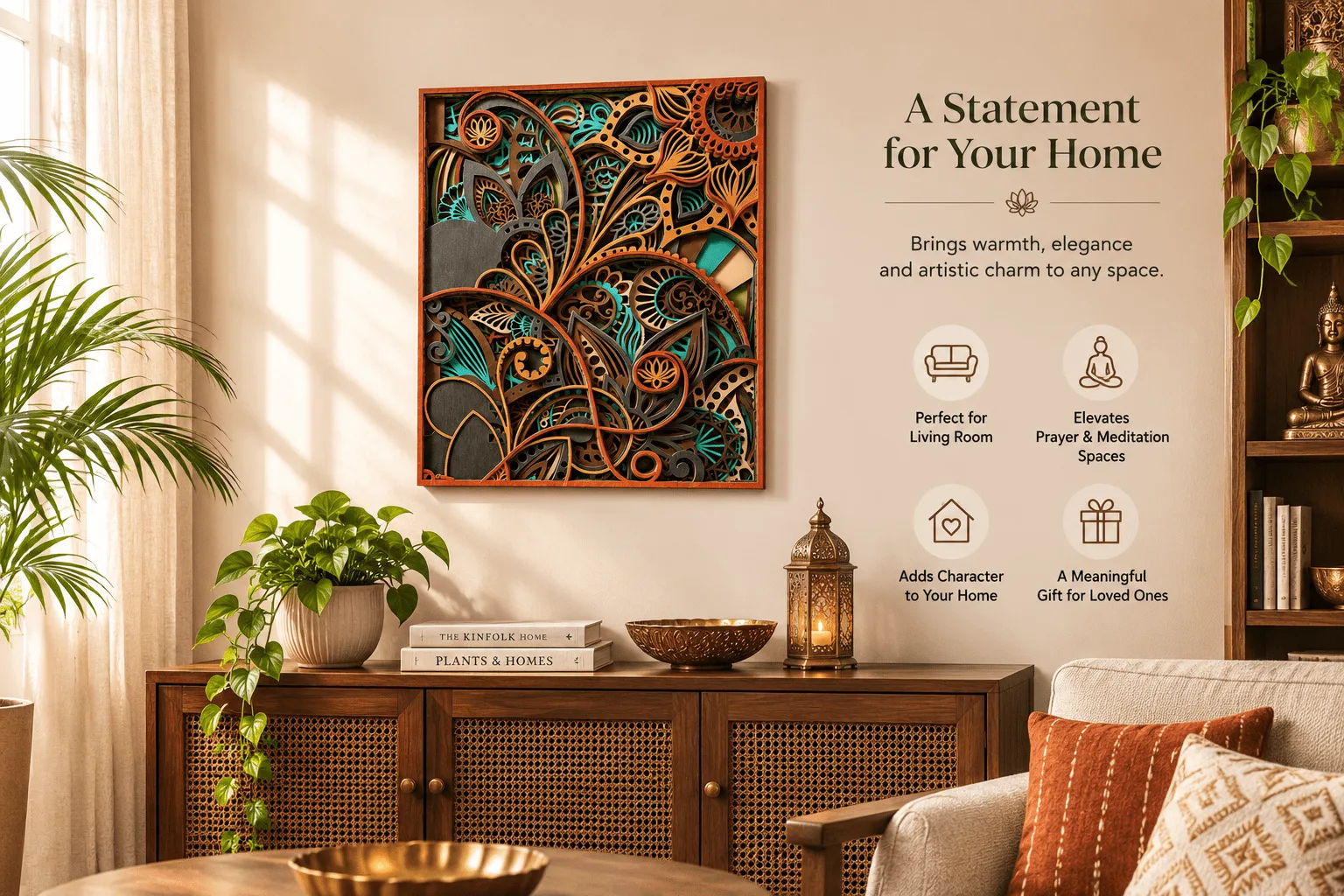
Our 10-layer Paisley Mandala brings paisley and lotus motifs together, while the Saxophone Mandala gives the classic form a playful, musical twist.
Where to hang mandala wall art at home
Living room
The most popular choice. A mandala above the sofa or on a feature wall becomes an instant focal point. Browse our living room wall art.
Entrance or foyer
The first thing guests see. A mandala here sets a welcoming, balanced tone for the whole home.
Meditation, yoga or pooja corner
Because mandalas are traditionally linked with focus and calm, they suit spaces meant for quiet reflection.
Bedroom
Choose softer colours and hang the piece above the headboard for a calm, restful feel.
Mandala placement and Vastu
Many families like to follow Vastu Shastra when decorating. Vastu guidance on artwork varies between practitioners, but commonly shared suggestions include placing calming, positive artwork on the north or east walls of a room, keeping the entrance area bright and uncluttered, and avoiding damaged or broken décor. If Vastu is important to you, it is best to consult a practitioner you trust about your specific home.
How to choose the right mandala
- Size: for a sofa wall, pick a piece about half to two-thirds the width of the sofa. For smaller walls, a piece around 50 cm wide works well.
- Colour: earthy terracotta and teal suit warm, traditional rooms; bold hand-painted colours suit lively, modern spaces.
- Depth: multilayer mandalas with more layers create stronger shadows and a richer 3D effect. See how multilayer wall art is made.
- Light: hang it where light falls from the side to bring out the layers.
Types of mandala art
The word mandala covers many different art forms. The main ones you will come across in India are:
- Mandala drawing and painting: hand-drawn or painted on paper, canvas or walls, often in black ink or bright colours.
- Dot mandala art: built up from thousands of painted dots, popular on stones, plates and canvas.
- Rangoli and kolam: India’s own floor mandalas, made with coloured powder, flowers or rice flour at the doorstep and during festivals.
- Printed mandala decor: posters, tapestries, bedsheets and wallpaper.
- Wooden mandala wall art: mandalas cut from wood. A multi layer mandala stacks 7 to 10 cut layers to create a 3D relief, so the pattern has real depth and shadow rather than looking flat.
Mandala art vs mandala wall decor
Mandala art as a hobby is about the process: drawing or colouring a mandala can be relaxing and meditative. Mandala wall decor is about the finished piece and how it changes a room. If you want a mandala that works as the focal point of a wall, look for one with depth and a size that suits your wall, such as a layered wooden mandala around 50 to 70 cm tall.
Frequently asked questions about mandalas
What is a mandala in simple words?
A mandala is a circular design that grows outward from a centre point in balanced, repeating patterns. The word comes from Sanskrit and is usually translated as “circle”.
Is it good to keep a mandala at home?
Many people keep mandalas at home because they find them calming and see them as symbols of harmony and balance. Popular places are the living room, entrance, pooja corner and bedroom.
Which mandala is best for home decor?
For a wall, choose a mandala sized to the wall and furniture, in colours that match the room. Layered wooden mandalas add depth and look good in both traditional and modern homes. See our multi layer mandala styling ideas.
Where can I buy a mandala for my wall in India?
Our mandala wall art collection is handcrafted in Guntur, Andhra Pradesh, ships free across India and arrives ready to hang.
Explore mandala wall art
Every Embercut Studio mandala is laser-cut from premium engineered wood, hand-finished in Guntur, and shipped free across India, ready to hang. Explore the full multilayer mandala collection, or learn how to hang and care for wooden wall art.